|
Working in groups of 3, you
will do a bacteriological analysis of water quality.
The Clean Water
Act is the cornerstone of surface water quality protection
in the United States. The statute employs a variety of regulatory
and nonregulatory tools to sharply reduce direct pollutant
discharges into waterways, finance municipal wastewater treatment
facilities, and manage polluted runoff. These tools are employed
to achieve the broader goal of restoring and maintaining the
chemical, physical, and biological integrity of the nation's
waters so that they can support "the protection and propagation
of fish, shellfish, and wildlife and recreation in and on
the water." |
|
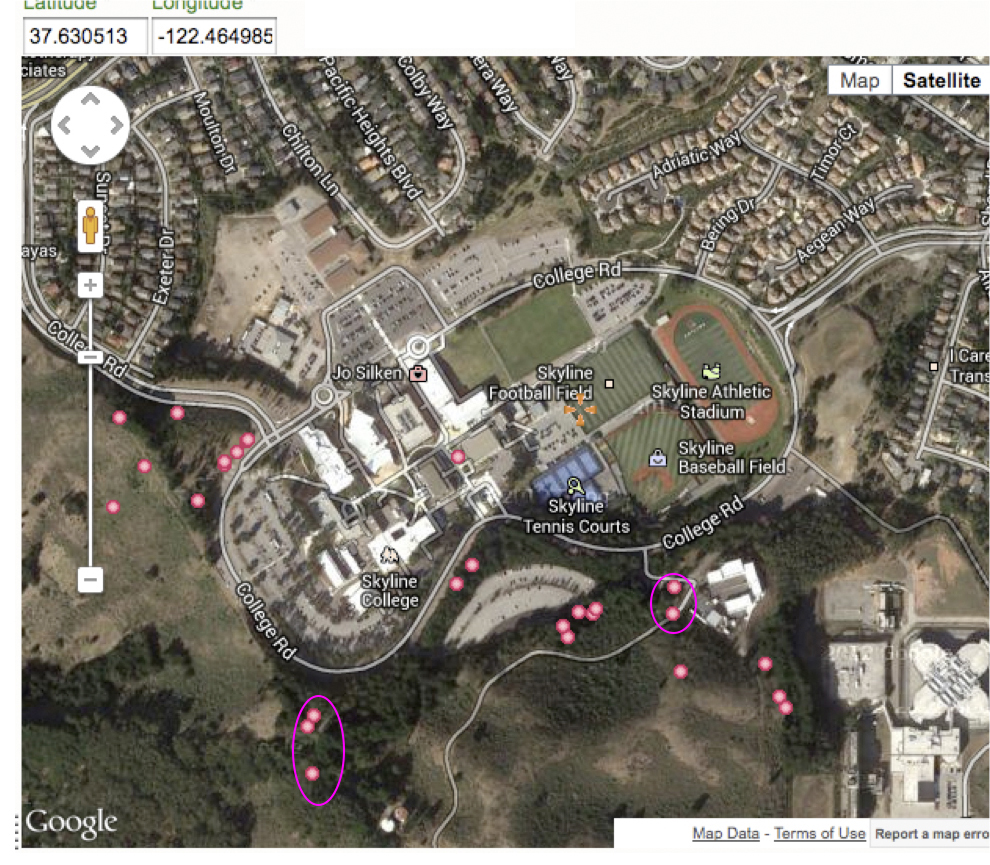
Possible project sites |
Freshwater creek sites
Calera Creek
San Vincente Creek
Martini Creek
Frenchman's Creek
Bean Hollow Creek
Pompanio Creek
Gazos Creek
Skyline College hillside spring |
Terrestrial sites
Soil & root water in Cape Ivy and native plants
|
Saltwater sites
Pilar Point (end of Westpoint)
Kiteboard Beach
Oyster Point
Estero wetlands
Candlestick Point, Jackrabbit Beach
Crissy Field Beach East
Baker Beach, Lobos Creek
Fort Funston, opposite Lake Merced overflow
|
map |
|
|
|
Lab
work |
To be eligible for a grade of
A: you must test 5 samples
B::4 samples
C: 3 samples
|
The number of samples doesn't
guarantee the grade but the samples are required to
earn sufficient points for that grade. |
|
| The
report must include |
 Background:
Description of the environmental setting Background:
Description of the environmental setting
Purpose
Procedures
Results
Discussion
of results
Conclusions
Literature
cited
Three
figures
|
| |
Your written draft
procedures should include the following: |
Description
of the project
Procedure
|
|
Resources:
Water Purity Tests
Multiple-tube Technique
Membrane Filter Technique
MPN table
Clean
water act
Sample volumes
Waterdog Lake project
Maps
Google Earth
USGS Store > Maps>7.5-minute
maps
•San Francisco North
•San Francisco South
•Montara Mountain
|
The grading form.pdf
and (1 copy of ) your slides printed in handout format (3, 6, or 9
slides per page) must be turned in at the time of your presentation.
Format.
10 minute powerpoint presentation. Guidelines.
Content
Title slide. Titles should be no more than ten
words. The title and authors' names appears on the first slide.
Environmental setting. A review of current literature
on the topic.
Procedures
Results
Discussion of results
Conclusions
Data must be included.
References must be included. Cite at the bottom of appropriate
slides using correct format. Style
Sheet
Peer
evaluation. Each student will evaluate the members of
their group and the other posters. Some of the criteria you
might use could be time spent, useful discussion, work on
research, work on layout, and general organization. Peer
evaluation form.pdf. |
|