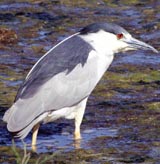
koala
Koala. Australia.
Photo©CLCase

Microbes & Indoor Air Quality

An Environmental Project

Christine L. Case

  My home page

  Skyline Biology

  Skyline College

Student enrolled in BIOL 690, BIOL 240 or BIOL 230 are participating in this research project. Read about How to keep a lab notebook.

Sick Building Syndrome | Lab Protocol | References | Preliminary Data

home

  Lab Protocol
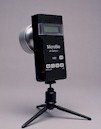
Use the impaction-type MicroBio air sampler to inoculate nutrient media. Some general guidelines for sampling and cultivation are described here.

Air Sampling

When to sample:

  • Visual evidence of biological contamination

  • Complaints after water damage

  • Different times of day

  • When ventilation is on (check for air flow)

How much to sample:

  • Take 5 to 10 samples from each test area

  • Sample 100 to 1000 L of air/sample. Caution: exposing one plate for >5 min could desiccate cells already trapped on the plate.

Where to sample:

  • Complaint area

  • Outdoors (control)

  • Noncomplaint area (control)


What to look for:

  • Ventilation system

  • Windows

  • Doors to outside

air sampler
Instruction manual

  Cultivation
To cultivate fungi:
Inoculate malt-extract agar or Sabouraud dextrose agar
Incubate 3-7 days at 20-25°C

To cultivate bacteria:
Inoculate trypticase soy agar, nutrient agar, or a differential/selective medium
Inoculate 1-7 days at 28-35°C

Count the colony forming units (CFU). For statistical accuracy, plates with between 25 and 250 colonies are used.

Calculate the CFUs/volume of air sampled.

Identification:
Fungi can usually be identified by macroscopic and microscopic appearance.

Bacteria can be classified by gram reaction.

  When are results meaningful?

  1. If fungi are more than half of the outdoor counts.
  2. If there is a significant difference between indoor and outdoor counts.
  3. If common fungi> 300 cfu/L.
  4. If other fungi> 150 cfu/L.